Does your church or organization qualify for a tax exempt status under IRC Section 501(c)(3)? With this status, your organization is exempt from paying income taxes and are also eligible to receive tax-deductible contributions.
Automatic Tax Exempt Status?
Churches usually have an automatic tax exempt status; however, you should make sure that your organization is classified as a church with the IRS.
Note: Although churches are exempt from income taxes and filing 990 tax returns, ministries are NOT exempt from filing a Form 990.
If you have filed for tax exempt recognition from the IRS with a 1023 form and been approved, check your 501(c)(3) letter and see what the IRS classified you as.
"Look at the upper right hand corner where it says public charity status. Does it say "170(b)(1)(A)(i)", or does it say "170(b)(1)(A)(vi)? Now take a look below where it says "Form 990 required:" does yours say "yes" or "No?" If your letter says "170(b)(1)(A)(vi)" and "yes", then you have been classified as a ministry." Excerpt from Raul Rivera's article: Young Church Forgets to File Tax Return, IRS Penalties Pile Up!
If you find out you have been classified incorrectly, I would first contact the attorney or tax professional that filed your 1023 incorrectly and inquire what they can do to correct it.
Save 10% on every ebook, spreadsheet & package on this site
Use code FCA at checkout
Browse the full list from the Packages menu above.
501(c)(3)?
Internal Revenue Code Section 501(c)(3)is the portion of the tax code that gives certain entities the right to receive tax deductible contributions.
An organization must meet the following requirements to qualify for a 501(c)(3) tax exempt status:
- The organization must be organized and operated exclusively for religious, educational, scientific, or other charitable purposes
- Net earnings may not inure to the benefit of any private individual or shareholder
- No substantial part of its activity may be attempting to influence legislation
- The organization may not intervene in political campaigns
- The organization’s purposes and activities may not be illegal or violate fundamental public policy
Church Accounting Package
A set of 2 ebook packages that covers the following topics...
- Fund accounting examples and explanations
- Difference between unrestricted and restricted funds
- Best methods for tracking restrictive funds
- Explanations and examples of financial statements for churches and nonprofits
- Minister compensation and taxes
- Payroll accounting and its complexities
- Much more - Click here for details
 Add to Cart Secure instant download
 Churches that meet the requirements of IRC section 501(c)(3) are considered tax exempt. There is a debate among church experts on whether that exemption is automatic or if churches should apply for official recognition from the IRS. Raul Riveria states that he "believes that applying for 501(c)(3) status is the best First Amendment defense available to your church." See his article: 3 Myths of the 501(c)(3)
Many churches DO seek recognition of tax-exemption from the IRS. One reason is that without the IRS's official recognition of tax exemption ... the burden of proof of tax deductible contributions is on your donors if ever audited.
To apply for recognition of tax exempt status from the IRS you will need to complete and file IRS Form 1023. This is a complicated form. I would strongly recommend doing some research and/or seeking a tax professional's assistance with that form.
Note: Although most churches are exempt from filing and paying federal income taxes, they may not be exempt from state taxes. Contact your state's tax agency to see what taxes your church is exempt from paying.
Also...church are NOT exempt from payroll taxes!!!
For more information on tax exempt status and churches download this publication form the IRS site: Internal Revenue Service’s Tax Guide for Churches and Religious Organizations
Note: The IRS is asking/requiring all organizations with an EIN including churches, ministries, and nonprofits to update their "Responsible Party". Organizations have 60 days from the date of the change to report any changes in their "Responsible Party"
In general, your "Responsible Party" is the individual who has direct or indirect authority over the organization and its assets. So if that person has changed since your organization originally filed the SS-4 form requesting your EIN, the IRS wants the name and Social Security Number of your current "Responsible Party".
The IRS wants you to use Form 8822-B to report this change and/or a change of address.
There is a special box at the top of the form for tax-exempt organizations to check.
State Exemption Laws and Regulations
Check your state exemption labor and tax laws!
Do not assume just because your church or nonprofit organization is exempt on a federal level that it will be exempt on a state level.
For example, churches are exempt from federal unemployment taxes.
However, you need to consult your state's unemployment tax agency to ensure your state grants an exemption from unemployment taxes.
Another example...a minister's housing allowance is excluded from federal income tax; however, a reader in Pennsylvania stated that housing allowance payments were not exempt from income taxes in his state.
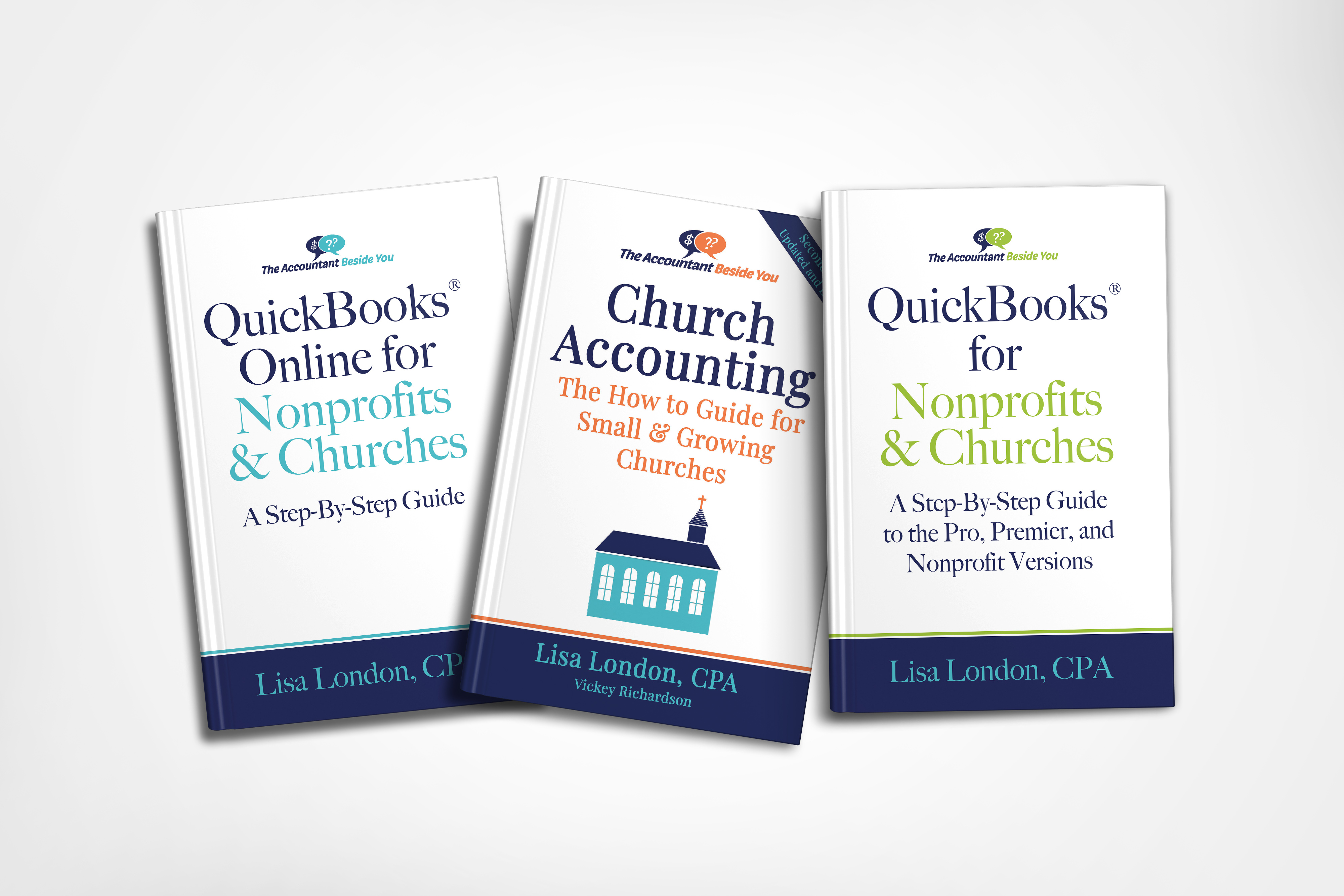
The Church Accounting: How To Guide devotes a whole section of the book to payroll for churches. It covers payroll terminology and forms and then takes you through the steps necessary to set up a payroll, calculate and file the necessary taxes and forms, and even details how to handle the minister's payroll. It also includes sections on filling out IRS forms: 1099-Misc, 1099-NEC, and 1096.
If you have QuickBooks or are considering using it in the future, go ahead and purchase the QuickBooks for Churches and the How To Guide combo for a complete package on setting up and administering a payroll using QuickBooks.
QuickBooks for Churches & Church Accounting Combo Bundle
Additional State Exemption Regulations
- Washington does not exempt churches, ministries, or nonprofits from sales taxes.
- Ohio grants an automatic sales tax exemption to churches after incorporation, but requires religious nonprofit organizations such as food pantries or homeless shelters to obtain 501(c)(3) approval.
- Utah requires churches to file Form TC-160 to grant a sales tax exemption The church must also be incorporated with the state, obtain an FEIN, and receive 501(c)(3) status.
- Florida requires that you file a Form DR-5 for sales tax exemption.
- California does not have a blanket exemption for nonprofit or exempt organizations from sales and use taxes. See CA Pub 61 for what is exempt and what is not.
- Maryland requires churches to do an annual Personal Property return.
- According to one of readers in GA (Oberon in Stone Mountain, GA), Georgia is one state that does NOT give churches an exemption for sales tax. Churches must pay sales tax on items used to operate the ministry.
- Another reader in LA, (Margaret in New Iberia, Louisiana) Louisiana does not exempt churches from sales tax. Sales tax not collected at time of purchase on items used in the operation of the church such as bibles, candles, etc., must be reported and paid directly to the state.
So research your state's labor and tax sites. Get on the phone and talk to a “knowledgeable” person about what the state expects from your organization and what your church or nonprofit is exempt from and what it is not exempt from.